


Left-aligned
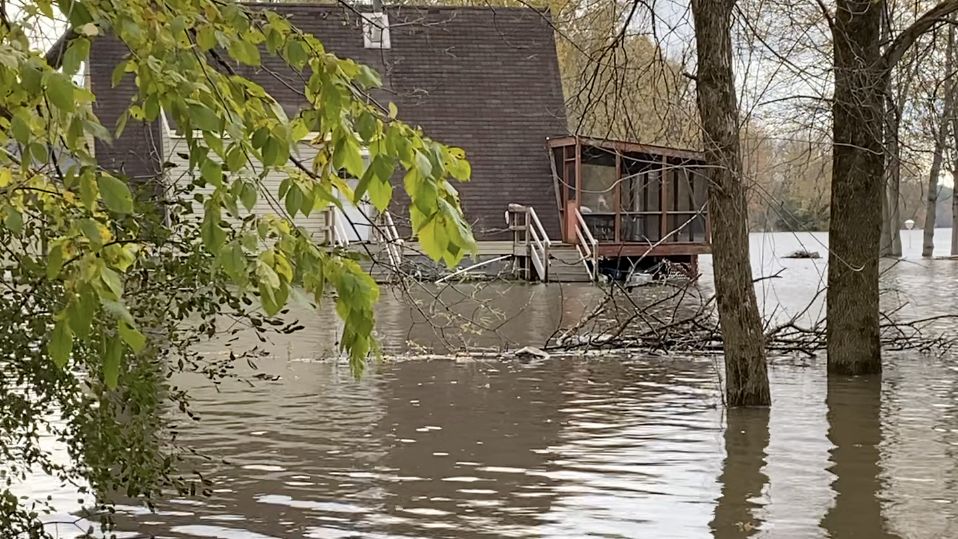
Joe Deverell owns property on Cross Lake in Cayuga County. Parts of his road are underwater, making it inaccessible for people wanting to get in or out.
“The water level is up six feet,” said Deverell. “It’s the highest I’ve seen it, and I’ve owned my place since 1996.”
Flooding is familiar to those who live on the water, but residents say it’s never been this bad. Safety has become a major concern for potential hazards and elderly residents.
“You wouldn’t think two inches of rain on a Tuesday afternoon would create this, but it did,” said property owner Jesse Nistico.
This October was one of the wettest, with nearly double the average amount of rain on record.
“To get a couple inches of rain is not unnecessarily uncommon, and the river does fluctuate quite a bit and it’s controlled,” Nistico said. “But, this, for whatever reason, has just been backlogged all year long. It’s almost like we never caught up.”
Many residents believe the New York Power Authority, who has managed the Erie Canal system for nearly five years, has some responsibility for the high waters.
“It hasn’t moved in about six days,” said property owner Joe Peta. “It’s still at this same height. The floodgates are open from Phoenix all the way to Oswego. Cross Lake is high, and to me, it’s like this is mismanaged. When the Thruway Authority ran the canal system, we didn’t have these issues. It’s only been since the Power Authority took it over.”
Residents have reached out to the Canal Corporation and Cayuga County Emergency Management to help alleviate the situation. Both say they are working to mitigate the flooding.
The Canal Corporation, a subsidiary of the New York Power Authority, said there have been flooding issues for the Finger Lakes, Seneca River, Oswego River and Oneida River in recent days. It is mitigating substantially less water from Cayuga Lake than they are through Baldwinsville to ease the water levels at Cross Lake.
The Cayuga County Health Department is warning residents about potential environmental health concerns from the flooding. They say to wear protective clothing, remove wet materials and to thoroughly wash walls and floors impacted.

