


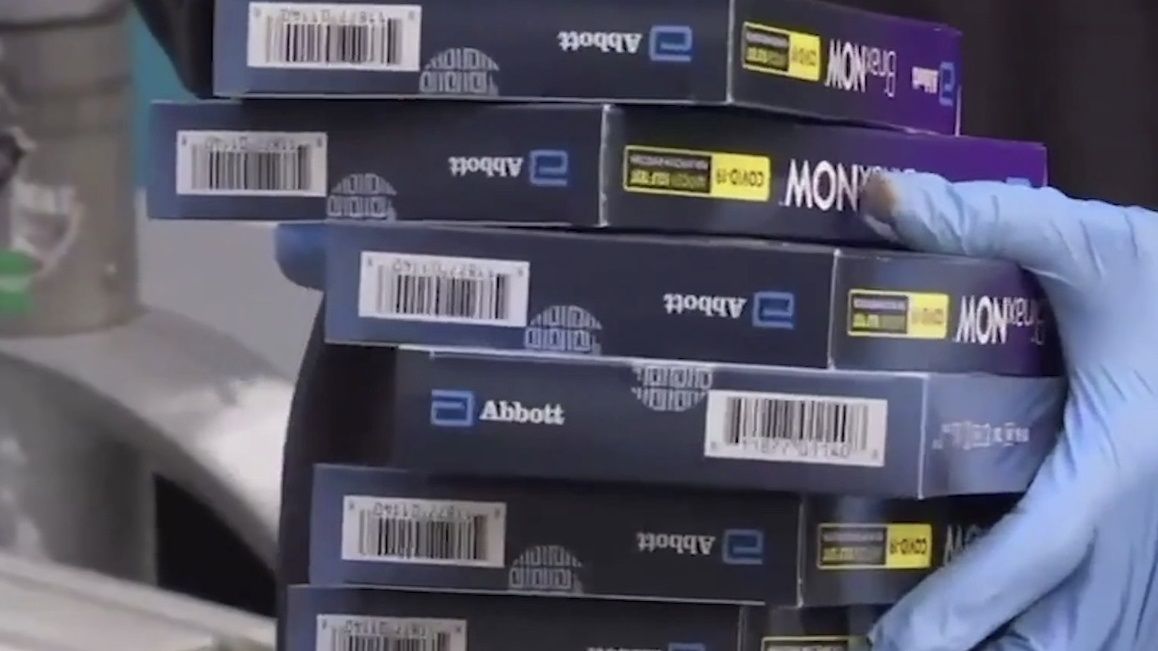
The federal government is sending out 1 billion at-home rapid antigen COVID-19 tests to those who sign up for them through a new website.
But considering the shipping times, a limit to how many tests a household may receive and that the omicron variant is peaking in the Hudson Valley, the benefits may not be decisive.
During his haircut Wednesday morning in Middletown, Herminio Aponte Jr. said a COVID-19 spike and a run on testing options is prolonging a staff shortage at his grandchildren’s schools and pushing students back to remote learning.
What You Need To Know
- To try to ease the testing crunch, the federal government will send rapid at-home COVID-19 tests to people who order them through CovidTests.org
- Experts told the AP Wednesday the plan is a “good first step,” and more tests are needed to achieve lasting progress
- The White House also announced Wednesday the federal government will distribute 400 million N95 masks, which they recommend for everyone to help lessen the omicron variant’s spread
He said abrupt, last-minute changes to their learning models is stressful for the entire family.
“That’s rough. I believe you should go school because that’s where you learn. At-home training on the computer, I really don’t care for that,” he said with a sigh. “I just can’t wait until this (pandemic) falls apart.”
To try to ease the testing crunch, the federal government will send rapid at-home COVID-19 tests to people who order them through CovidTests.org. The website went live Tuesday night.
Yari Torres, a barber at 6 West Barbershop, took issue with two aspects of the plan: The tests ship in 7 to 12 days from the time an order is placed, and there is a limit of four free tests per household.
Torres pointed out that many people need tests more quickly, and many households have more than four people.
“You’re only going based on address,” she said of the COVID-19 test policy. “You’re not going by the people who are living there. That would be a big problem there.”
The U.S. Postal Service is setting up 43 centers where the tests will be packed and shipped, and is hiring more than 7,000 temporary workers, according to an agreement between the agency and the union representing its employees.
Experts told the Associated Press Wednesday the plan is a “good first step,” and more tests are needed to achieve lasting progress.
Health economist Zoe McLaren of the University of Maryland, Baltimore County said the government should make COVID-19 rapid tests as accessible as vaccines.
“The playbook for rapid tests should look exactly like the playbook for vaccines,” McLaren told the AP. “They’re both things that help keep cases down and help keep COVID under control.”
Barber Sean Castillo is not planning to order the free rapid tests. He said he could get swabbed for a more reliable PCR test and receive results before receiving a rapid test from the government.
“If they’re going to do it at home, I’d rather just go to the doctor and have it done that way, because then there’s no questioning anything,” Castillo said.
The White House also announced Wednesday the federal government will distribute 400 million N95 masks, which they recommend for everyone to help lessen the Omicron variant’s spread.
Instead of mailing them, the White House said the masks would be available at pharmacies and community centers.

