


As it stands today, the process for a military veteran to become approved for U.S. Veterans Affairs disability benefits can be painful and long.
Veterans advocate Gavin Walters of Vet2Vet Ulster County, also an Air Force veteran, said some veterans become demoralized while waiting to receive a ‘service connection.’
Receiving a service connection means a veteran’s injuries have been determined to be connected to their military service, and is, therefore, eligible to receive vital benefits through the VA.
What You Need To Know
- Veterans and advocates on Monday discussed solutions to delayed service connections with U.S. Veterans Affairs Secretary Denis McDonough and Rep. Antonio Delgado
- Advocates said the delays were discussed at length during a private meeting with both
- “…People listened. People were able to share. People were able to talk about different things,” one vet said
“It could be six months, or it could be two years,” said Walters, who lives with depression and post-traumatic stress, of the wait times.
For his service connection, Walters said he had to wait 10 years. Walters said that if a veteran’s condition is not immediately visible, like say, combat injuries, that veteran may have to wait months or years to receive a service connection.
“They have to figure out the paperwork. They have to figure out the severity of the injury,” Walters said of the VA’s arduous vetting process. “They have to get the records from the National Archives. There’s so many things they have to look into to say, ‘yes’ or ‘no,’ does that person receive a service connection?”
The wait, he said, can make a veteran wonder.
“We always feel like we deserve it,” he said, “but at a point, when you don’t get the service connection from the VA saying you do qualify, it’s like, ‘Why can’t I have it?’”
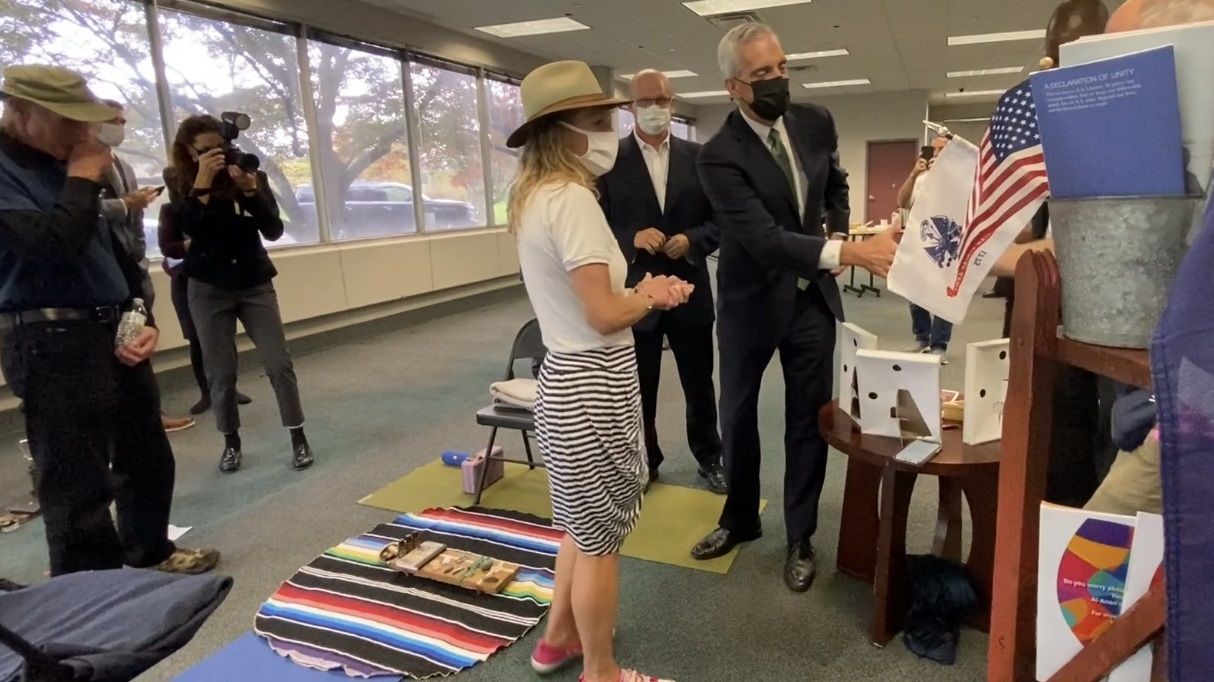
Walters, veterans and advocates were at Tech City Monday morning to discuss solutions with U.S. Veterans Affairs Sec. Denis McDonough and Rep. Antonio Delgado.
Advocates said service-connection delays were discussed at length during a private meeting with McDonough and Delgado.
McDonough said afterward he wants more funding and resources from all levels of government to go to local veterans’ groups to connect more people to VA benefits, more quickly.
“Local providers, local innovators, local veterans are working to ensure that we meet vets where they are,” McDonough said. “This is a great opportunity for us to learn and to work on that with them.”
Walters said he appreciated McDonough for directly asking the advocates for ideas of how to expedite the lags and taking notes.
“Sometimes we feel abandoned,” Walker said. “At times it does feel like that — when nobody is willing to listen to us. I’ll say today, people listened. People were able to share. People were able to talk about different things.”

