


Being back in class for in-person learning has been a priority this school year. But it has come with a host of challenges.
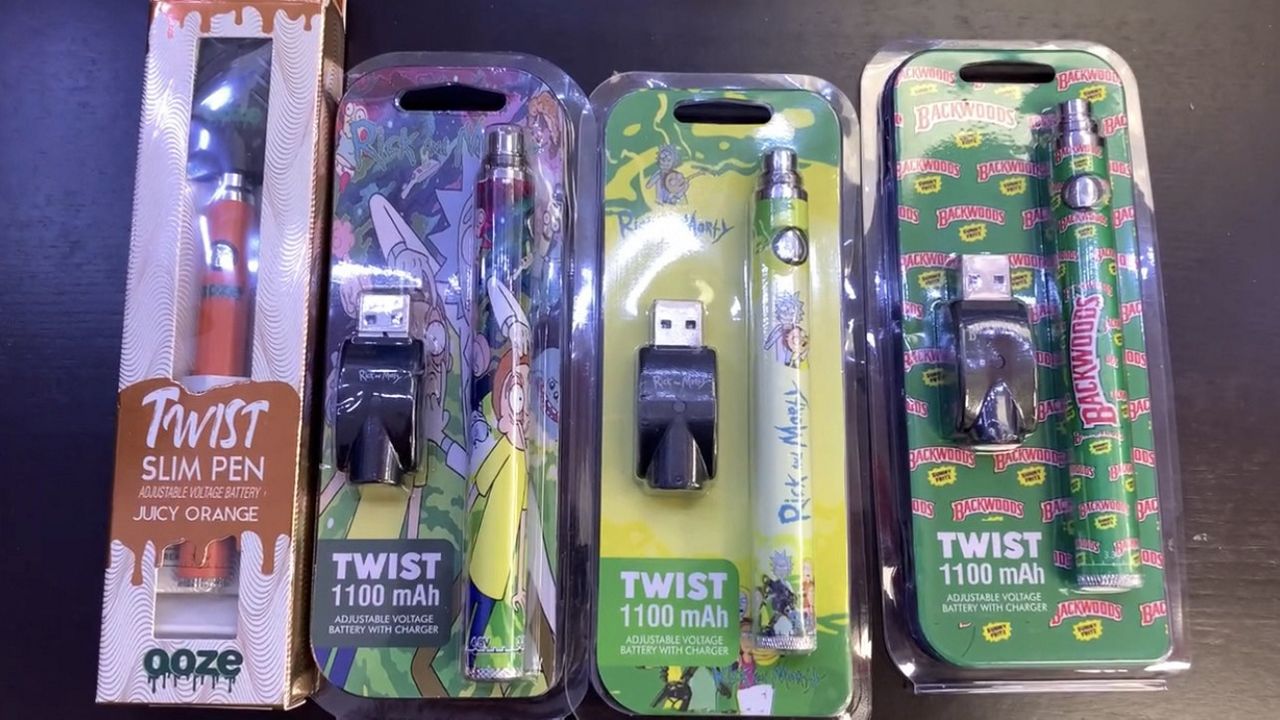
One of those challenges is students using dab pens in school. Dab pens function similarly to regular vape pens, but are used to inhale concentrates of THC, an activity that is illegal and has many other negative consequences.
School officials like Damon Villnave, assistant principal at Paul V. Moore High School in Central Square, say the devices are becoming more popular among students and they’re doing what they can to keep them out of their students’ reach.
“This is all since the first day of school,” Villnave said, pouring out a bag of confiscated vape pens.
School administrators say in the first few weeks of school they are struggling, collecting the pens from students.
“It’s the legalization of it,” Villnave said. “But here on school property, it’s not legal. Being under 21, it’s not legal.”
Despite the new legalization laws, it is still illegal to smoke or vape cannabis on school grounds or school vehicles.
Charles Jackson is a youth substance abuse prevention coordinator. He says using dab pens and THC has consequences for kids that go beyond breaking the law.
“If you are altered on cannabis you’re going to make poor decisions,” Jackson said. “You will do things you said you would never do, because it’s distilled cannabis. It has a higher level of THC. And when you raise the level of THC it creates more issues as well as physical issues.”
Jackson has some tips that parents can watch out for.
“If they’re drowsy all the time,” Jackson said. “If they’re constantly having dry eyes. If they’ve got Visine around all the time. If they’ve got red eyes, puffy eyes, anxiety, depression. If they change their friend group. Listen to their music. Get involved with youth culture, so then you can start having these conversations.”
“Be open to what they have to say,” Jackson said on what parents should do if they find out their child has been using a dab pen. “Don’t necessarily be punitive right away.”
School administrators also seem compassionate and armed with resources for students and families.
“They started potentially using these to help them self-medicate or ease their anxiety,” Villnave saod. “But with that knowing that schools are back in session we have hired social workers at each building. We do have more access to psychologists. So we do want to help students with this.”
Villnave urges parents to educate their kid’s and to remind them that these items are illegal for their age and at schools.
“We don’t want any of them in school,” Villnave said. “Because now what happens is it becomes accessible to other students. And that’s the worst thing that could possibly happen.”
These educators have two great reminders…
“Their behavior will let you know,” Jackson said.
“Talk with your kids,” Villnave said. “What are they seeing? What are they hearing?”
If you are worried about your child and want help, start by calling their school for support. Some additional resources outside of the school can be found here.

