


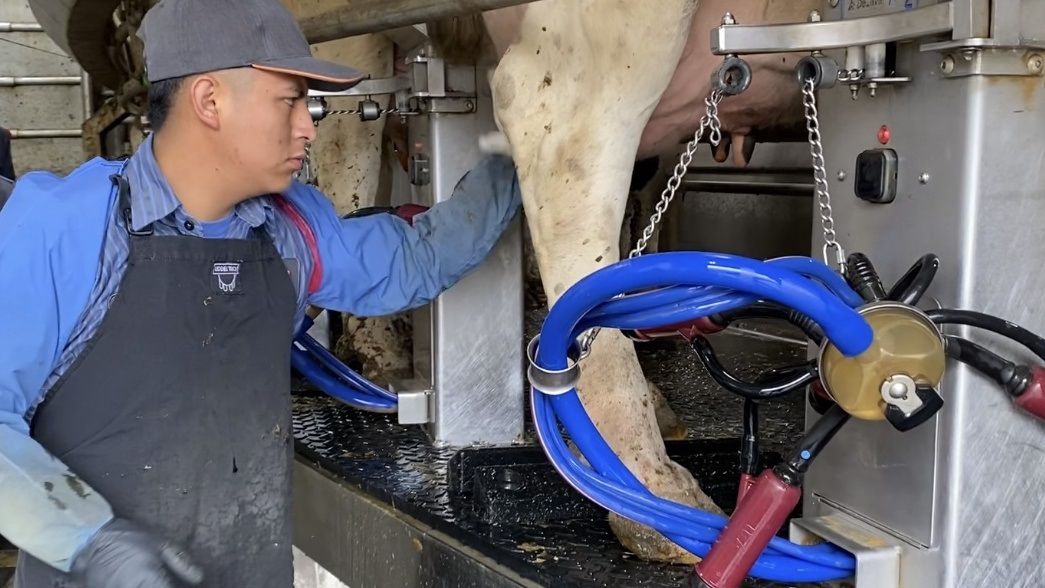
Ideal Dairy Farms is a five-generation business based in Washington County, which operates on a 65-hour work week that includes five hours of overtime due to the state’s 60-hour threshold.
Partner John Dickinson says it’s been manageable.
“The economic situation of the dairy industry right now isn’t going to afford us the opportunity to pay overtime over 40,” Dickinson said.
Later this year, the state wage board will revisit the 2019 Farm Laborers Fair Labor Practices Act and consider lowering the 60-hour overtime threshold to 40 hours.
Farmers like Dickinson say that will be difficult on their operations.
“We’re in a business where we don’t just pass our labor costs on to consumers, so it makes it challenging,” said Luke Getty, also a partner of Ideal Dairy Farms.
They argue with small margins of profit that are consistently reinvested into the farm in order to keep it going, the 40-hour threshold will make it harder to stay in business.
Farmers also say many of the workers will leave and go to another state, where they can work more hours.
“These need 24/7 attention. We can’t shut down these cows. We can’t just walk away and take a break. There needs to be people and labor working along side,” said Bill Peck, owner of Welcome Stock Farm.
However, farmworker supporters are advocating for the 40-hour threshold. They argue these employees should get time and a half after 40 hours of work, just like everyone else.
“They’re not asking for anything special,” said Lisa Zucker, a senior attorney for legislative affairs for the NYCLU. “They’re just asking to be treated like all hourly workers in New York state.”
She says these potential labor policy changes are long overdue and would support an annual incremental decrease down to 40 hours.
“If farmers are suffering, the answer cannot be the continued exploitation of workers,” Zucker said.
But farmers say they cannot be compared to other businesses. For one, they can’t set their own prices. And two, they say housing is included for the farmworkers.
“It’s long, it’s hard. We take great pride in what we do for our communities and our businesses,” Peck said. “But I’m not sure what the next 30 years will look like.”

