


For some, the debate is about the authenticity of climate change science. But for those that specialize in science and education, the debate is more geared toward how dire the situation may be.
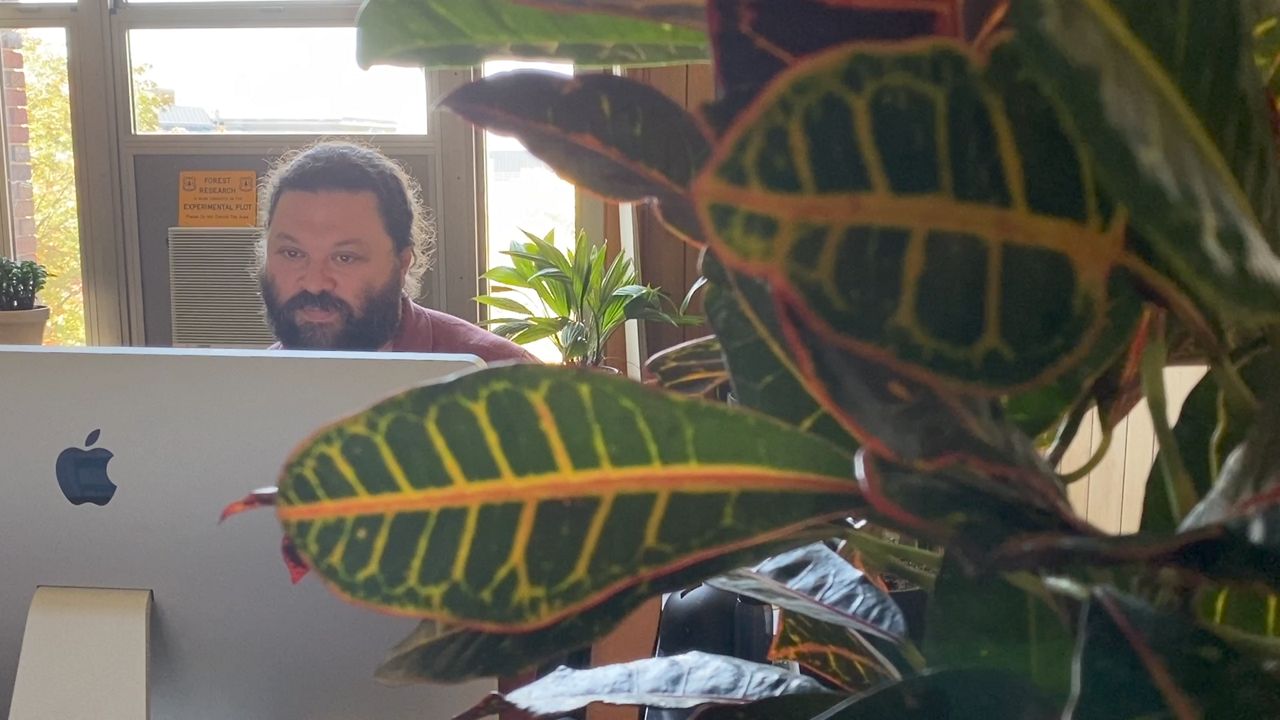
A professor at the SUNY College of Environmental Science and Forestry has a unique perspective from the school, and is among the most equipped to answer these questions.
The issue? A planet seeing the effects of climate change.
Associate professor Colin Beier of the university’s ecology and sustainable resources department said climate change isn’t that we’re seeing storms or droughts, but rather the frequency and intensity of extreme weather.
“Think about a part of your life that isn’t affected by the weather,” said Beier. “Flooding can do a tremendous amount of damage and threaten lives. I mean, 50 people they estimate, 50 to 60 people died in New York City from (Hurricane) Ida.”
And while it may be hard to see the other side through much of the damage, Beier said it’s not all “doom and gloom.”
“So, we’re seeing the growing season get longer, and by that I mean the time in which our leaves are on the trees, basically,” he said. “As that gets longer, our forests and our farms could be more productive, as long as conditions are good.”
And whether people choose to see the good, the bad or the whole scope, it all hits home, wherever that may be.
“Just from like a civil engineering point of view and a planning point of view, it becomes very hard to figure out, where do we allocate our resources?” said Beier.
Beier tells the story about not being able to predict snowfall in Alaska, where his research took him, and Juno, having a shortage of plows.
Something somehow more relatable hit the Empire State in 2012.
“We had some of the warmest temperatures we’ve ever recorded – in the 80s in March, you know. We had like two weeks of 80-degree temperatures in March,” said Beier.
And that sort of flux hits local agriculture hard.
“All the apple trees flowered early, the bees were barely even awake yet, but they came around. But then in April, we had our typical kind of couple of weeks of nasty winter-still-here, can-still-rear-its-head-type of weather,” said Beier. “We lost 90% of the apple crop that year. That’s billions of dollars.”
Whether it’s plows, apples and seemingly everything in between, there’s a call to action.
“I think that there are some examples, definitely, in many parts of the world where we need to be on full red, Defcon 1 or sky is falling. The Arctic is a good example of that,” Beier said.
The sky isn’t falling yet, but…
“Two degrees celsius warming globally is a threshold where we’re going to stop seeing subtle changes and start seeing some pretty urgent changes,” said Beier. “Whether you care or not about the integrity of nature, you have to recognize that we are part of nature and we are part of these ecosystems.”
Much like commercial and personal practices, Beier says the key word for our environment is “adapting.”
“We can’t completely insulate ourselves from this. I think if we act entirely out of fear, though, we might miss some opportunities, especially to engage folks who are skeptical that this matters,” Beier said.

