


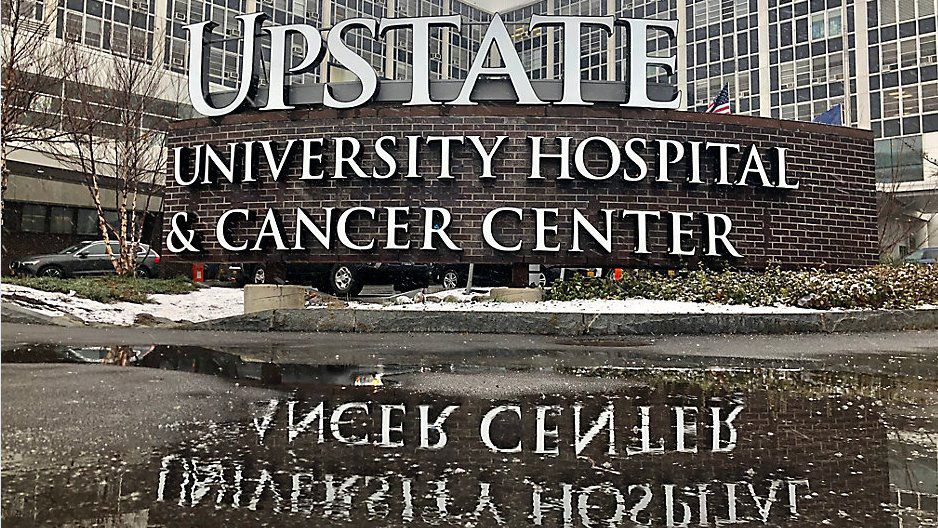
Despite the state putting Upstate University Hospital, Upstate Community General and Crouse on its capacity watchlist, Onondaga County Ryan McMahon said the hospitals continued to “be in good shape” after conversations he had with health leaders Tuesday morning.
In a press conference Tuesday, McMahon noted Crouse would be most affected by the state’s assessment that, should a lack in bed capacity continue into Friday, elective surgeries would be halted for more than a month. According to McMahon, Upstate has not been doing elective surgeries for months.
“These aren’t vanity surgeries, these are people that are sick,” said McMahon. “[I’m a] little surprised to see the state pull that trigger right now. A lot of hospitals manage their capacity really well. I thought it was a surprising move, based on some of the metrics.”
McMahon held firm that local hospitals were capable of continual treatment of COVID patients, and questioned how the state used data in compiling the list.
“COVID is not driving all the beds in these facilities. None of these hospitals have more than 50 COVID patients right now, maybe a little more than that,” said McMahon. “I was on the phone with executives of the three area hospitals today and they said they have more than 50 beds in the community. That’s a fact.”
“I think we just have to go through it and when we talk about prevention methods, that all will help improve the capactiy of the hospital. if we can take all the burden away by getting people vaccinated, make testing more available — not everyone needs to go to the hospital — we can avoid that overcrowding,” said Onondaga County Health Director Dr. Indu Gupta.
McMahon reiterated a call for residents to get their booster shots to help curb the potential for introduction of the recently discovered omicron variant into the community, and reminded residents that hospital and emergency room visits are not necessary for everyone. As of Tuesday morning, the variant hadn’t been identified in the United States.
“Emergency rooms do get crowded at times, leading diversions to other areas for people as they come in. Emergency rooms are for true emergencies — not COVID tests. All medical infrastructures need to start working together better and we can help facilitate that. We need support from every level to treat patients. COVID is not the number one for capacity issues. Other illnesses are creating pressure,” said McMahon.
The county executive recalled that last year, there were over 300 county residents hospitalized with the virus, noting that the region is not at that point currently.
But, capacity also has been limited by other factors, including local staffing issues to competition with traveling nurses, pay rates, and, “to a lesser extent vaccine mandates,” McMahon said.
“Everybody in the health care world, you could make a strong argument, is in severe restraints or crisis mode but that doesn’t mean they don’t have the capacity to treat those who are sick,” McMahon said.
Cases have declined in the past week, McMahon said, reporting that the county is recording 39 positive coronavirus cases per 100,000 people, a 25% decrease from last week in what he suggested was likely the end of the Halloween surge. McMahon added officials should know the impact of Thanksgiving in the next week.
“We need to continue to vaccinate the public,” said McMahon of preparation methods for winter. “Second, we need to get our booster shots. Third, stay at home when you’re sick and get a test. Stay home, you have to rule out COVID. That’s the easiest way to avoid transmission. Fourth, our guidance has been masking indoors. Fifth, certainly when you’re sick, and many people will continue to get sick, talk to your doctor about treatments to prevent hospitalizations. If we can do these things well, we can continue to grind this thing out through the winter months.”
