


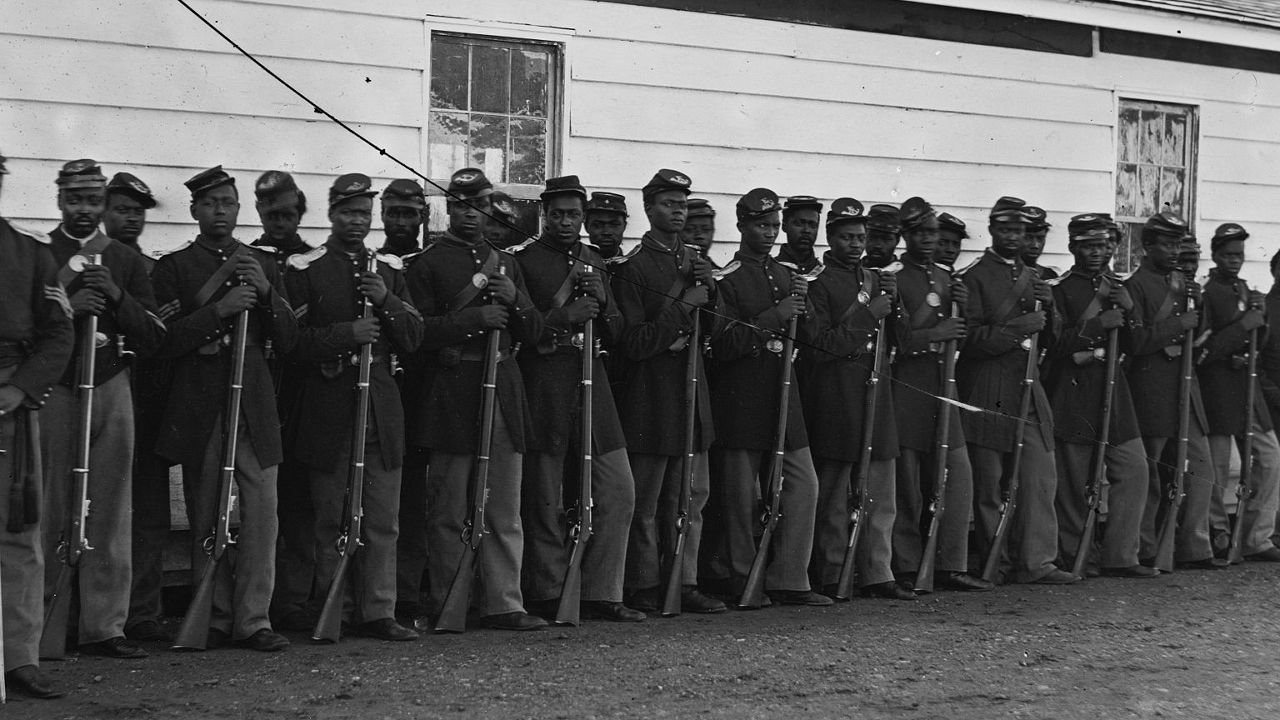
To some, it may look like a simple veteran grave marker in an old cemetery, but Levi Tanner is much more than a name on a headstone. On October 6, 1864, he enlisted in the 86th Colored Regiment in Florida, fighting for the north in the Civil War.
“These were poor African-Americans, some who escaped slavery and made their way here either directly here or after a period of time,” said Gerald Smith, former Broome County historian.
While most of Tanner’s life is unclear, records show he was buried in an unmarked tomb here at Spring Forest Cemetery in Binghamton. To find out more, we stopped by to see former Broome County Historian Gerald Smith.
Smith reflected on an article he wrote on Tanner just a couple of months ago.
“These people need to be honored. They don’t need to be rich or famous, or white, they just have to be people who played an important part of our community and how we’ve gotten from ‘point A’ to where we are today,” said Smith.
For many of the African-American troops returning home, there wasn’t a lot of recognition to be had, and Tanner was no different. Like Tanner, many of them were buried in unmarked tombs, with little to no records to speak of.
That is until one day, nearly 150 years after his death. The Daughters of Union Veterans of the Civil War worked one more time to secure a monument for Tanner. This time, just a couple of months ago, they were successful.
“He’s just an honorable man who served this country and sought new life here in the Binghamton area and then died, but he was buried in an unmarked grave, which is a horrendous disservice to the veterans, especially the African-American veterans,” said Smith.
For Smith, ensuring these local historic figures are remembered has always been his mission and a civil war connection with his own grandfather always kept him motivated to making sure men like Tanner are never forgotten.
“When he escaped a confederate prison, a slave family took him in and hid him. And if they hadn’t and they gave him directions to the union troops, I wouldn’t be here. So for my entire life of hearing that story and then hearing that it was true, I’ve sort of dedicated myself to this type of research,” said Smith.

