


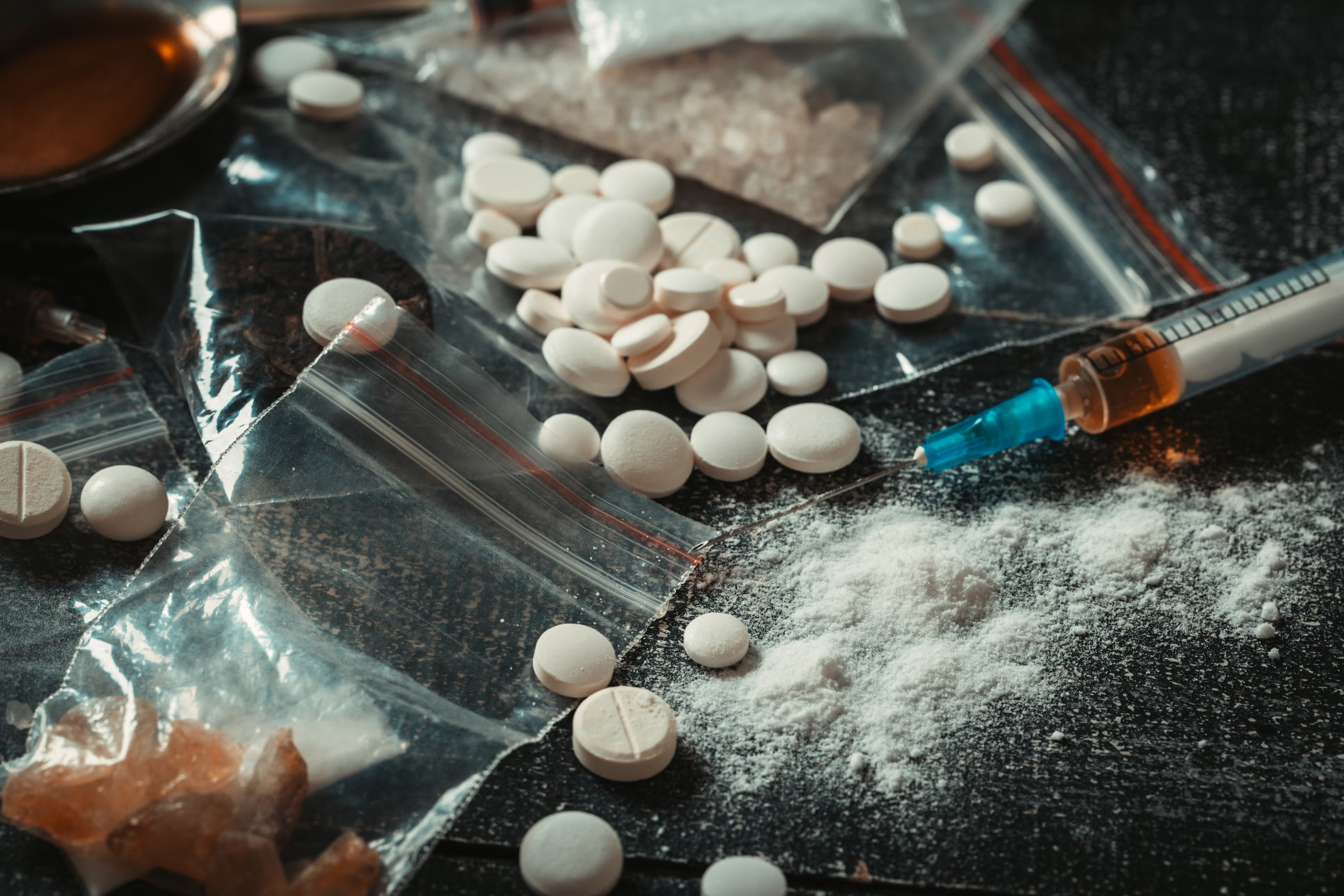
 K2. Angel dust. X. At schools, parties and in lively bars, various nicknames for the latest vices echo around. Turn on the TV or go online, and you’ll see ads for opioid awareness for the greater Utica area with tragic accounts from people who’ve lost loved ones to overdose, and the major source of loss is increasingly becoming synthetic drugs like Fentanyl.
Tragically, Fallon Nodecker, a 25-year-old young woman from Rome died from an opioid overdose only last November. Much of the circumstances surrounding her death have not been disclosed, though Fentanyl is the suspected culprit. Nodecker’s loss was a reminder that dangerous use of narcotics is not only a problem for the forgotten people of the inner city, but also a problem that’s reaching into suburbia.
The What
Fentanyl has presented a new chapter in the opioid crisis. Originally invented in 1959 as a medicinal pain killer, it has since become the most notorious of narcotics distributed throughout the US and abroad. It does, however, have a competitor.
Christopher Hanrahan, a registered nurse at Wynn hospital, shared some frontline perspective on Utica’s drug scene:
“[In Utica] The tide is beginning to shift [away from fentanyl]. Methamphetamine is now becoming the drug of choice. Driven primarily by price and “value” meaning a small amount of money can get you higher for longer.”
Methamphetamine is a powerful stimulant that far exceeds the potency of cocaine. The effects of meth last more than 12 times longer than that of cocaine with users often remaining awake for days, and it’s believed to be much more damaging to the brain as well. It also happens to be highly addictive with some users becoming addicted after a single use.
The invention and use of Methamphetamines goes back over a hundred years and gained popularity during WW2 as a “fighting man’s” drug. Shortly after WW2, it found its way into the civilian side of life as a cheap alternative to cocaine.
In recent years, Mexican cartels have assumed control for the vast majority of methamphetamine production, as well as fentanyl, and import it into the US by way of legal entry points, mostly using vehicles with hidden compartments.
Like cocaine, the initial euphoria that meth users feel is followed by an extreme alertness leading to aggression and often psychosis. Most commonly, ambulance crews respond to meth patients in a state of psychotic paranoia and being secured by police. However, their psychotic state does not necessarily make them violent towards others.
Hanrahan: “When I say psychotic I generally mean disorganized, delusional and bizarre. I have been in the medical field for ~22 years and I have had a lot of patients under the influence of meth. There have only been a handful of incidents where acute meth intoxication was the driving factor in a violent encounter.”
The emerging popularity of meth doesn’t mean the presence of fentanyl should be discounted. It is still very much a concern. It has all the same effects as heroin, but it’s 100 times as potent, meaning that a small amount can be lethal. Yet, another synthetic is now posing a threat in a way that’s increasingly hard to regulate.
Hanrahan: “Fentanyl is not going anywhere. Fentanyl is a drug dealer’s dream because it can make your heroin more potent, and you only have to smuggle very small quantities in order to make a lot of money. Synthetic Cannabinoids are also becoming more and more prevalent and problematic.”
Synthetic Cannabinoids are mistakenly referred to as “fake weed”, but in truth are a collection of chemicals mixed together and over 100 times more potent than marijuana and incredibly dangerous. Their common street names are K2 and Spice, and because they’re made from various legal chemicals, the user can’t predict the effects, which are often that of psychosis, violence, and even suicidal thoughts.
Hanrahan: “Again, it’s a synthetic chemical which is sprayed on plant material. The effects are much different than actual marijuana. And again, ITS EVERYWHERE. Every little corner shop in Utica has it, and it’s not necessarily illegal.”
The Who and Where
In Hanrahan’s 22 years of experience, the drug-abuse patients have been men more often than women, with the age ranging from teenagers to people in their 60’s. Common hotspot locations for overdose emergencies being Oneida Sqaure, James Street, and Dudley Ave.
There have been some, unsubstantiated, accounts claiming that the 1600 block of Neilson is a major location for drug selling, but opinions differ on that.
In Utica, Fentanyl, Meth, and Synthetic Cannabinoids are each as popular as they are dangerous. The majority of Fentanyl and Meth is made in Mexico, but on a local level, where are Uticans getting these drugs?
The general idea people have of secret meth labs out in the rural parts of the country accounting for any significant amount of the meth market has become outdated to say the least. According to narconon.org, the federal government has done much in preventing people from buying large amounts of the precursor ingredients, like ephedrine and pseudoephedrine, necessary for cooking meth. Time was local operators out in the boonies would cook meth and bikers would sell it. Not anymore. As stated earlier, over the last ten years, the Mexican cartels have become responsible for the overwhelming majority of methamphetamines coming into the US, as well as fentanyl which passes from Asia to the US via Mexico. As for its import into Utica, it’s more a matter of lone individuals and small gangs.
Recently, local and state police as well as the DEA busted one Ivan Rodriguez Sr as a head of fentanyl distribution ring in Oneida county. He along with his son Ivan Jr and other partner Eric Ares ran serious amounts of fentanyl into Utica from a source in NYC. Their type of operation is perhaps typical. Less an advanced hierarchy like a cartel and more an efficient small team of sellers getting their supply from NYC where it’s likely imported from Mexico.
Whether or not Rodriguez and his associates were apart of a bigger organization has yet to be determined.
Two questions present themselves after examining the modern problem of drugs:
1: Once synthetics have arrived in NYC, what can Law Enforcement possibly do to mitigate the import of synthetics into Utica?
2: Are we even looking at this problem correctly in regards to it’s damage? By overselling the death count from narcotics, are we in fact underselling the greater destruction of it? Since 1999, there have been almost 1,000,000 deaths from overdose in the US averaging out to 42,000 per year (same number of Americans die each year from car accidents). This means that out of a population of three hundred and twenty-seven million people, roughly 0.0001 percent (1 out of every ten thousand) die each year due to drugs.
Despite the fact that since 2010 the overdose fatality count has skyrocketed, less than 70 people died in all of Oneida county in 2020. Does that mean it’s not a crisis? Hardly.
How many homeless people are there because of narcotics? How many families have seen loved ones become unrecognizable due to meth and heroin? The conversation needs to be shifted away from death and focused more on social destruction and mental health. Drugs are here, so what do we do with the drug addicted?
